
Shibuya Sky Tickets: How to Book the Slot You Actually Want

What we would book or buy
Booking partner
Klook
activities
Booking partner
KKday
activities
Shibuya Sky is the observation deck on top of Shibuya Scramble Square, and it has one feature that decides everything else about your visit: you book a specific entry time, not a day ticket. That single rule is why people either get the sunset they wanted or end up on a rooftop at 11 a.m. with a view of haze.
It also explains the two most common questions. Can you turn up and buy on the day? Sometimes, and often not when you want to. Is the ticketing complicated? Not really, but the timing is, and the rules at the top of the building are stricter than most observation decks.
This guide covers how the ticket actually works, how to pick a slot, how to buy without a card being declined, and the entry rules that are easier to know now than at the gate.
What you are actually buying
A timed entry ticket to an observation deck on two levels: an indoor floor with the city at eye level through glass, and an open-air rooftop deck above it. The ticket gets you up; the time on it is when you go up.
Three things about the ticketing are worth knowing before you compare prices anywhere.
The price depends on the time of entry, not the date. The official ticket page splits adult tickets into entries before mid-afternoon and entries from mid-afternoon onwards, with the later band costing more. That is unusual for an observation deck and it matters: an evening slot is not the same product at the same price as a midday one, on any channel.
Online sales open a limited window ahead. The official site sells roughly two weeks of dates at a time, so a date three months out is not on sale yet. If you are planning far ahead, set a reminder rather than assuming the page is broken.
Online and counter inventory are not separate. The official page states that when the web allocation for a slot is sold out, the ticket counter is sold out too. This is the single most useful fact on the page: turning up on the day is not a backup plan for a sold-out sunset.
What the ticket does not include matters as much. It is entry to the observation floors, not a food and drink package: the building also sells separate rooftop bar and event tickets, and those are a different purchase with their own rules, including a minimum number of people on some of them. Do not assume a standard ticket gets you a seat anywhere.
The slot decision: sunset, night, or midday
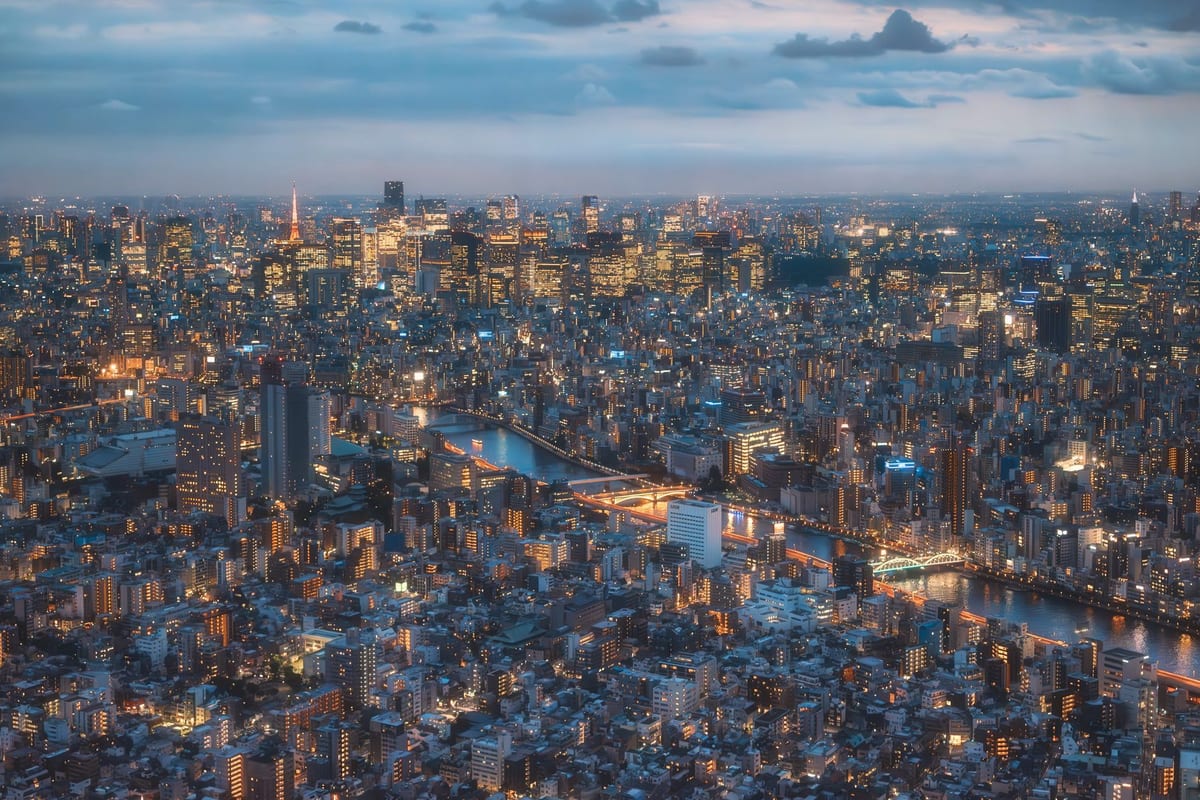
The view changes completely across the day, and the slot you choose is really a choice about what you want to photograph and how long you are willing to queue.
- Mid-afternoon. Cheapest adult band, clearest light, and the least competition for space at the glass. If the forecast is hazy, this is the slot where you still see something. Downside: it is the least dramatic version of the view.
- Sunset. The slot almost everyone wants, and the one that sells out first. Book it as soon as your date opens. Arrive inside your entry window rather than at the minute of sunset, because the good positions at the glass are taken early.
- After dark. The city becomes a grid of light and the rooftop is windier and colder than people expect. Fewer crowds than sunset, and a completely different photograph.
One practical note on the rooftop: it is open air, and the rules there exist because objects blow off it. Anything loose has to be stored before you go up, which is why the luggage rule below is not a suggestion.
Who should skip it
Three honest cases for leaving it out of the itinerary.
If your trip is short and the weather forecast is poor, an observation deck is the most expensive way to look at cloud. The indoor floor still gives you the city, but the reason people book this building is the open roof, and the roof is what closes first.
If you are travelling with a stroller, a suitcase, or a lot of camera kit, the luggage rules turn a relaxed evening into an errand: everything has to be stored before you go up, and the storage happens at ground level, not at the top.
If you mainly want a skyline photograph and you are flexible about the building, a booking with a strict entry window is the least forgiving way to get one. Paying more for the sunset band and then missing the window because the station exits took twenty minutes is a common and entirely avoidable way to waste the evening.
How to buy, in order
- Check the official site first. It is the source of truth for what is on sale, which entry bands exist on your date, and whether a slot is gone. You do not have to buy there, but you should look there.
- Buy as soon as your date is inside the sales window. Sunset slots on weekends and public holidays go first; a date that is available on Tuesday morning can be gone by Thursday.
- If the official payment page refuses your card, use an authorised reseller. Overseas cards are sometimes declined by the official ticketing flow for fraud-prevention reasons; this is a known friction rather than a fault on your side. Compare the ticket on Klook or check what KKday lists before you assume you cannot book. Both are authorised channels for Japan attractions, and our comparison of the two platforms explains how their terms differ.
- Keep the QR code offline. Screenshot it. The moment you need it is the moment you are in a lift queue with no signal.
- Check the entry window on your ticket, not the time you would like to arrive. The gate is strict about the window, and arriving early is not always accommodated.
What the booking screens actually ask for
The purchase is short — about four decisions — and knowing them in advance is the difference between a two-minute booking and a fifteen-minute one with a card being declined.
- Date, then entry band. The date is chosen first, then the time band. If the band you want is greyed out, the slot is gone; picking another band on the same date is the only in-page workaround.
- Ticket type by age. Adult and child are separate products with different rules, and the child ticket is the one that is often only available at the counter. Do not assume you can buy a child ticket on the same screen as yours.
- A name and an email. The QR code arrives by email and is also retrievable through the app or the booking reference. Use an address you can open on your phone without data — a work inbox behind single sign-on is a poor choice for this.
- Payment. The one step that fails for overseas visitors. If it declines twice, stop retrying and switch channel; repeated failed attempts are what trigger the fraud checks.
After the purchase, do three things before you leave the hotel: screenshot the QR, add the entry time to your calendar, and note whether the listing said QR entry or voucher exchange. That last one decides whether you walk straight to the lift or queue at a counter first.
Official site or reseller: what actually differs
There is no single “official ticket site” in the sense a foreign visitor expects, and that is where most of the confusion starts. Two channels sell the same building, and they behave differently.
| The official ticketing site | An authorised reseller (Klook, KKday) | |
|---|---|---|
| Inventory | The operator’s full allocation, released about two weeks ahead | Its own allocation, so a band that is sold out officially can occasionally still be available |
| Payment | Sometimes declines overseas cards | Usually accepts them, occasionally with a markup or a promotion |
| Cancellation | The operator’s rule for that specific product | The reseller’s rule, which is often more generous |
| Entry | QR from the operator | QR from the reseller, or a voucher to exchange |
| Support on the day | The operator’s counter | The reseller’s in-app chat, slower at a gate |
The order that works: look at the official site to see what exists and what has sold out, then buy where the card works and the cancellation terms suit you. What you should not assume is that the official site is the only legitimate channel, or that a reseller ticket gets you in faster. It does not — same lift, same ticket type, same roof.
The rules that catch people out
These are the points where a booked ticket still turns into a bad afternoon:
- No luggage on the rooftop. Bags and large items are not allowed up, and the official guidance is to use a locker before you go. Turning up with a suitcase means dealing with it at the building, not at the top.
- Late arrival can be refused. The ticket page states that entry may be declined if you miss your designated time. Build a buffer for the Shibuya scramble, the lift queue and the security check.
- Early arrival is not a guarantee. A timed ticket is not a fast pass; arriving before your window may mean waiting.
- Re-entry is restricted. Plan the visit as one continuous block, and use the toilet before you go up.
- Resale is prohibited. Tickets are tied to the purchase and the name on some channels; a cheap ticket from a reseller on the street is a risk you do not need.
- The rooftop can close for weather. High wind, extreme heat and storms can shut the open-air deck while the indoor floor stays open. Read the current closure and refund policy on the official site before you buy if that risk matters for your dates, because the policy is not the same as a general “rain check”.
Weather, closure and refunds
This is the part where reading the operator’s own wording matters more than any summary, including this one. Two separate things can happen: the whole building closes, or only the rooftop closes while the indoor observation floor stays open.
The second case is the one that generates complaints, because the ticket was sold for the view from the top and the top is shut. The official FAQ addresses weather-related closures and refunds directly, and the answer is not a blanket refund. Check it for your date rather than relying on what a blog said last year.
Practical response: if the forecast is genuinely bad, and your dates are flexible, move the booking while you still can rather than travelling to Shibuya and hoping.
Getting there and timing your arrival
Shibuya Scramble Square sits directly above Shibuya Station, which is both convenient and a trap: the station is enormous, the exits are numbered, and “above the station” can still mean ten minutes of walking underground. Use the building’s official access instructions and aim for the entrance named on your ticket.
Two timing notes that make the visit calmer:
- Arrive 20 to 30 minutes before your window, not at the last minute. The lift up is the bottleneck.
- Do not schedule anything tight after. There is no time limit once you are up, and the sunset slot is exactly when you will want to stay longer than planned.
If you are building a Tokyo itinerary around this, our two-week Japan route shows where a booked slot fits without breaking the day, and if you are sorting data for maps and tickets, the eSIM decision guide is the companion read.
Frequently asked questions
Can I buy Shibuya Sky tickets on the day?
Sometimes, but do not plan on it for sunset. Online sales open about two weeks ahead, and the official site states that a slot sold out online is also sold out at the counter. For a same-day visit, go early in the day, expect the midday or early afternoon band, and treat it as a bonus rather than a plan.
Why is a later entry more expensive?
The official ticket page prices adult entry in two bands, with entries from mid-afternoon onwards costing more than earlier entries. It is a demand-based structure: the late afternoon and evening slots are the ones people want.
Is it better to book on the official site or a reseller?
Official first: it is the source of truth and usually the simplest. Resellers exist for two practical reasons — overseas cards are sometimes declined by the official payment flow, and some travellers want the ticket inside an app alongside their other bookings. Check the cancellation terms on whichever channel you use.
What happens if it rains or the rooftop closes?
The indoor floor can stay open while the open-air roof is closed, and that is not automatically a refund. The official FAQ covers closures and refunds, and the rules are specific. If your dates are flexible and the forecast is bad, move the booking before you travel.
How long can I stay?
There is no time limit once you are inside, but you enter within a designated window. Most people spend under an hour, and considerably longer if they are waiting for the light to change.
The bottom line
Book the time band you actually want rather than the cheapest one, buy the moment your date enters the two-week sales window, and treat a sold-out online slot as final. Take no bag you would have to store, arrive inside your window with a buffer, and check the closure policy for your date in the week before you travel.
If the official payment page will not take your card, compare on Klook or see KKday options — the ticket is the same building, and the difference is the booking terms, not the view.


