
An Osaka Itinerary That Does Not Fight the City

What we would book or buy
Booking partner
Klook
activities
Booking partner
KKday
activities
Osaka rewards a different plan from Tokyo. Tokyo is a city of districts you travel between; Osaka is a city of districts that sit close enough to walk, eat and walk again. The mistake most first-timers make is treating it as a checklist — a castle, an aquarium, a tower, a market — and spending the day underground on the metro instead of at the counter of a shop that has been doing one thing well for forty years.
Three nights is the right amount for a first visit. It is enough for the food neighbourhoods, one full day out, and one thing you booked in advance. It is not enough for Osaka and Kyoto and Nara and Kobe, so the plan below chooses.
How Osaka is laid out
Five areas do most of the work, and the useful thing to know is that they cluster.
- Namba and Dotonbori. The centre of gravity: canal, signs, street food, and the easiest place to be at night. Noisy, crowded and exactly what people come for.
- Umeda. The northern transport hub — the station complex, department stores underground, and an observation deck above it. Cleaner and calmer than Namba.
- Osaka Castle and Temmangu. The historical side, with a park that is genuinely pleasant, and a market street that is worth an hour.
- Shinsekai and Tsutenkaku. The retro district: kushikatsu, old signage, a tower, and a distinct atmosphere that is neither polished nor boring.
- The bay area. Universal Studios Japan, the aquarium, and a lot of open space. This is a whole day, not a stop.
Namba, Shinsekai and the castle area sit within a short metro ride of each other. The bay is further out and deserves its own day. Umeda connects to Kyoto and to the airport, which is why it is often the smarter base than Namba if you are doing day trips.
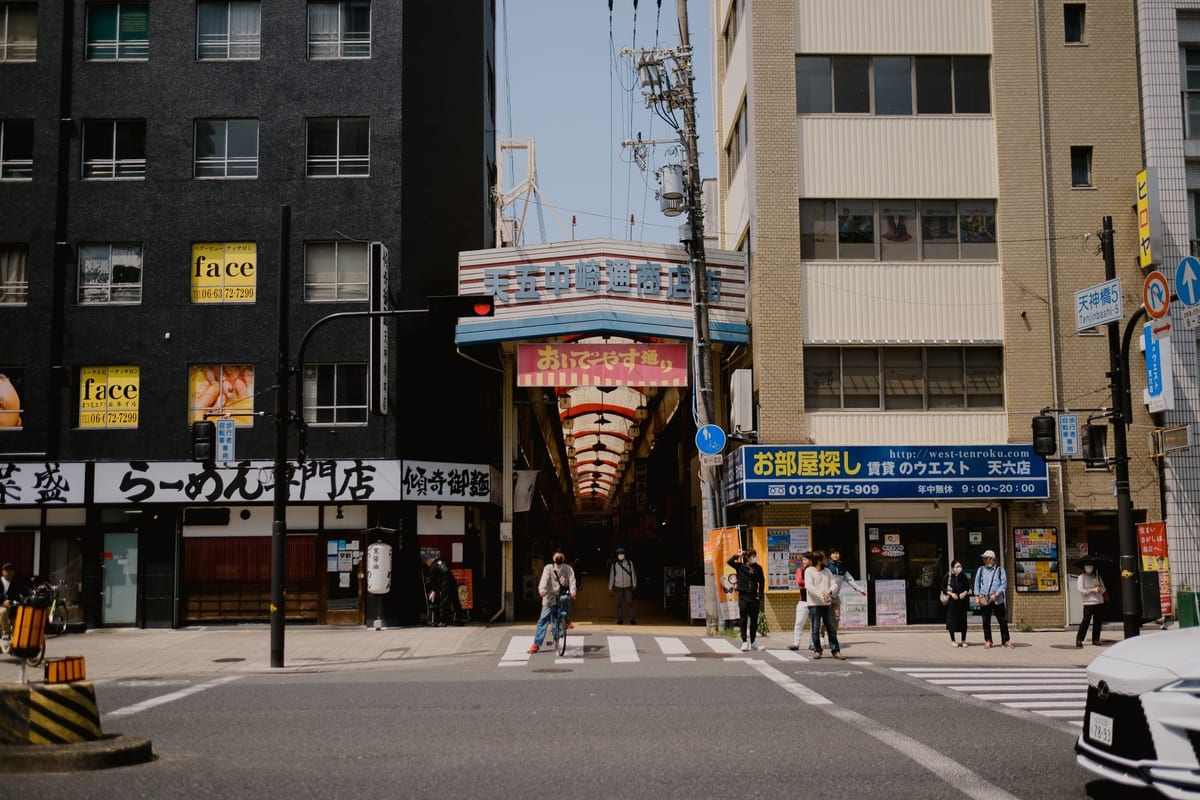
Day one: land, eat, and stay local
The first day should not include a booked attraction. Arrival is unpredictable and Osaka’s airports and stations are big.
Morning or midday. Drop bags at the hotel and walk the immediate area rather than travelling to a sight. If you are staying in Namba, that means the arcades and the canal; if Umeda, the underground city and the department store food halls, which are a destination in themselves.
Afternoon. Pick one anchor nearby. The castle and its park if the weather is good, the Shinsekai loop if you want the older city. Do not attempt both.
Evening. Dotonbori, deliberately late. The street food is the point: takoyaki, kushikatsu, okonomiyaki, and the local rule that you order, eat, and move on rather than settling in for the night. Cash helps at the smaller counters even where cards are accepted.
If you are coming from Tokyo, this is also the evening to confirm your return or onward booking, because Osaka’s stations are easier to navigate on a full stomach than at 7 a.m.
Day two: the booked day
This is where the advance planning earns its place. Two options, and you should pick one rather than trying both.
Universal Studios Japan. A full day, and the most common reason people add Osaka to a Japan trip. Buy the park ticket and, if you want Super Nintendo World, an Express package that explicitly includes area entry — the queue product does not include admission, and only the packages that name area timed entry guarantee you get in. Our guide to the USJ Express Pass breaks down which package does what.
Or the bay without the park. The aquarium, the ferris wheel and the waterfront are a calmer day if you are travelling with younger children or you simply do not want a theme park. Book the aquarium slot if the date is fixed.
Either way, start early. Both options involve a queue, and both are better with a ticket in hand on your phone rather than a visit to a counter.
Day three: castle, market, and the old city
Morning. Osaka Castle and the park. Go early — the park is at its best before the tour groups — and decide in advance whether you want to go inside the keep or just walk the grounds. The grounds alone are a decent morning.
Late morning. Kuromon Market, if you want the food version of the city. It is a market rather than a restaurant, so you eat standing up and you go before the lunch crush. Cash, small notes, and no expectation of seating.
Afternoon. Shinsekai and Tsutenkaku. This is the part of Osaka that feels least designed for visitors: kushikatsu counters, old signage, a tower you can go up if the queue is short.
Evening. Either back to Namba for a last proper meal, or Umeda for the observation deck at dusk. The deck above Osaka Station is the easier of the two to reach and the view is the reason to go up.
If you have a fourth day, spend it outside the city: Nara for the deer park and the temples, Kyoto for a single district rather than a list, or Himeji for the castle. All three are straightforward day trips by train, and all three are better as a day trip than as an hour squeezed between other things. Our comparison of the day trips ranks them by travel time and what you actually get when you arrive.
If it rains
Osaka in the rain is not a lost day, but it is a different plan. The castle keep is indoors and the park is not, so keep the castle and drop the walk. Kuromon is covered, which makes it a better wet-day stop than a fine-day one, and the arcades around Namba and Umeda are effectively a covered city.
What to avoid is the bay in bad weather: it is exposed, the walk between the aquarium and the station is long, and the park day in steady rain is a miserable way to spend the ticket price. Move the bay to a better day if you have the flexibility, and use the wet day for food and the indoor observation decks.
One more timing note for the castle: go in the first hour after opening. By mid-morning the tour groups arrive in coaches, and the park paths that were empty at eight are a procession by ten.
What to book before you fly, in order
- The park day, if you are doing one. It is the only item on this itinerary that genuinely sells out on specific dates.
- The aquarium or any timed attraction. Fixed entry windows go first on weekends and holidays.
- Accommodation with free cancellation, then refine once the day-trip decisions are made.
- Rail seats if you are travelling during a holiday period such as Golden Week or Obon.
- Airport transfer on the last day, if you have an early flight.
Tickets for the park and the timed attractions are sold by the attractions themselves and by resellers. If the official payment page will not take your card, Klook and KKday sell the same dated products; our comparison of the two explains how their cancellation terms differ, which matters more for dated tickets than the headline price.
Where to stay, and the base that saves you time
Namba if you want to walk out of the hotel into the trip: food, canal, nightlife, and the airport train at your back. It is loud, and the rooms are small.
Umeda if you are doing day trips or arriving from Kyoto: the station is the point, and the underground food halls are a decent consolation for the lack of a canal.
Shinsekai if you want the old city and a cheaper room, with the trade-off that you will metro to everything else.
Our guide to choosing a Kyoto base covers the other half of the double-city question, including whether Kyoto or Osaka is the better base for a mixed trip.
Money, transit and the pass question
Transit in Osaka is a metro city: buy a reloadable IC card at the airport or the station and stop thinking about tickets. The regional rail pass question is separate — a nationwide pass is only worth it if your route includes two or three long shinkansen runs, which our two-week Japan route works through.
There is also a city sightseeing pass that bundles metro travel with entry to a long list of attractions. Whether it pays depends entirely on how many of those attractions you would have visited anyway, and the list changes between seasons. Count the attractions you actually plan to see, then compare — do not buy it because it sounds efficient. Our guide to the Osaka Amazing Pass works through that count version by version.
Cash still matters more than you expect: market stalls, small counters and older restaurants. Carry some, and check what your card charges for the conversion.
Frequently asked questions
Is three days enough for Osaka?
For the city itself, yes. Three nights covers the food districts, the castle area and one full booked day. If you want Osaka plus Nara plus Kyoto, add days rather than compressing.
Should I stay in Osaka or Kyoto?
Osaka if you want nightlife and food within walking distance and do not mind a big, busy city. Kyoto if the temples and the quieter streets are the point. For a trip that includes both, staying in one and day-tripping to the other works: the trains between them are frequent.
Do I need to book Universal Studios Japan in advance?
Yes, and the park ticket and the Express Pass are separate purchases. The Express Pass does not include admission, and only packages that say so include Super Nintendo World area entry.
Is the Osaka sightseeing pass worth it?
Only if you would visit several of its included attractions in the same day or two. Count them first. A pass you half-use costs more than the tickets you actually wanted.
Do I need cash in Osaka?
For markets, small counters and some older restaurants, yes. Cards are widely accepted in shops and chain restaurants, but a cash float prevents the awkward moment at a stall.
The bottom line
Three nights, three shapes: arrival and food, one booked day, castle and old city. Book the park or the timed attraction before you fly, keep the first day free of commitments, and choose your base by whether you are day-tripping or eating your way through Namba.
The itinerary fails when it tries to include everything. Osaka is a city that rewards returning to the same counter twice, not one that rewards a longer list. Compare the park and attraction tickets on Klook or see what KKday lists before your dates get close, and leave the rest of the day to the street.


